
CCENT Answer 103: ARP Tables
Today’ post gives the letter answer(s), and explains why, for this latest #CCENT question. The question focuses on ARP tables, but with enough noise to make you think about what really happens in the network. Don’t read here until you try the question!
Literal Answer(s):
D, E
Figure Reference
Figure 103 is just a repeat of the figure from the question, for handy reference.
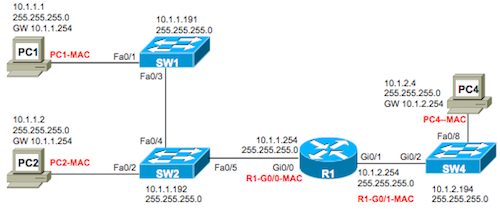
Figure 103: Network Used for Question 103
General Discussion: ARP with Multiple Subnets
ARP is simple as an end to itself. Many books fall to the temptation to explain ARP at its simplest. However, the exams have the word “troubleshoot” scattered all over the exam topics, which means you have to be ready to figure out how ARP is used in scenarios like the one in this question.
ARP learns MAC addresses of other devices in the same LAN-based IPv4 subnet, but not the MAC addresses of devices on other subnets. First, the protocol itself uses messages that routers do not forward. Second, the goal of ARP is to learn MAC addresses, used in Ethernet headers – headers that routers discard before forwarding the encapsulated IPv4 packets. So, a host needs to know ARP table entries for other IPv4 addresses on the same subnet.
Also, the LAN switches have no role in the ARP process in this scenario, other than to forward the Ethernet frames that hold the ARP messages. The switches have IP addresses for management, but to allow PC1 and PC2 to connect to web server PC4, the switches need no ARP entries at all. In fact, the switches could even have zero IPv4 configuration, and the PCs would still be able to connect to the web server (PC4).
ARP Entries Needed on the Subnet on the Left
To support the two web connections, the following ARP table entries will be needed:
- PC1: For its default router, 10.1.1.254, MAC address R1-G0/0-MAC
- PC2: For its default router, 10.1.1.254, MAC address R1-G0/0-MAC
- R1: For PC1, 10.1.1.1, MAC address PC1-MAC, listed off R1’s G0/0 interface
- R1: For PC2, 10.1.1.2, MAC address PC2-MAC, listed off R1’s G0/0 interface
Of these four ARP table entries on the various devices, note that only one of the items (R1’s entry for PC1; answer E) happens to be listed in the answers.
Other items of note that affect the right and wrong answers as worded:
- PC4 (the web server) will not learn PC1-MAC or PC2-MAC.
- Other ARP table entries may exist, but they are not required for the two web connections described in the question, so those could not be a correct answer in this case.
ARP Entries Needed on the Subnet on the Right
The subnet on the right also requires some ARP information, but the MAC addresses will be for hosts with IPv4 addresses in the subnet on the right (10.1.2.0/24). To support the two web connections, the following ARP table entries will be needed:
- PC4: For its default router, 10.1.2.254, MAC address R1-G0/1-MAC
- R1: For PC4, 10.1.2.4, MAC address PC4-MAC, listed off R1’s G0/1 interface
Of these two ARP table entries on the various devices, only one of the items (PC4’s entry for R1’s G0/1 interface IP and MAC address; answer D) happens to be in the list of correct answers.